Equipment Matched to Your Home's Actual Requirements
HVAC Installation in La Mesa and surrounding areas for homeowners replacing aging systems or upgrading to modern comfort solutions
Aging HVAC systems eventually reach the point where repair costs accumulate faster than the equipment's remaining useful life, leaving you with inconsistent temperatures, rising energy bills, and the uncertainty of when the next breakdown will occur. Reitz Heating & Air Inc performs HVAC installations in La Mesa, Santee, Rancho Penasquitos, or a surrounding area that address these concerns through proper system sizing, equipment selection based on your home's design, and installation practices that prioritize long-term performance over speed. You work directly with a local family-owned business where quality workmanship matters more than meeting installation quotas.
Installation begins with load calculations that account for your home's insulation, window area, ceiling height, and orientation to determine the heating and cooling capacity actually required. Oversized systems cycle on and off too frequently, never running long enough to remove humidity or distribute air evenly, while undersized equipment runs constantly without reaching desired temperatures. Proper sizing eliminates both problems by matching equipment output to your home's measured needs rather than applying formulas based solely on square footage.
Request a consultation to discuss HVAC installation options and receive equipment recommendations tailored to your comfort priorities and budget.
What Proper Installation Requires Beyond Equipment Hookup
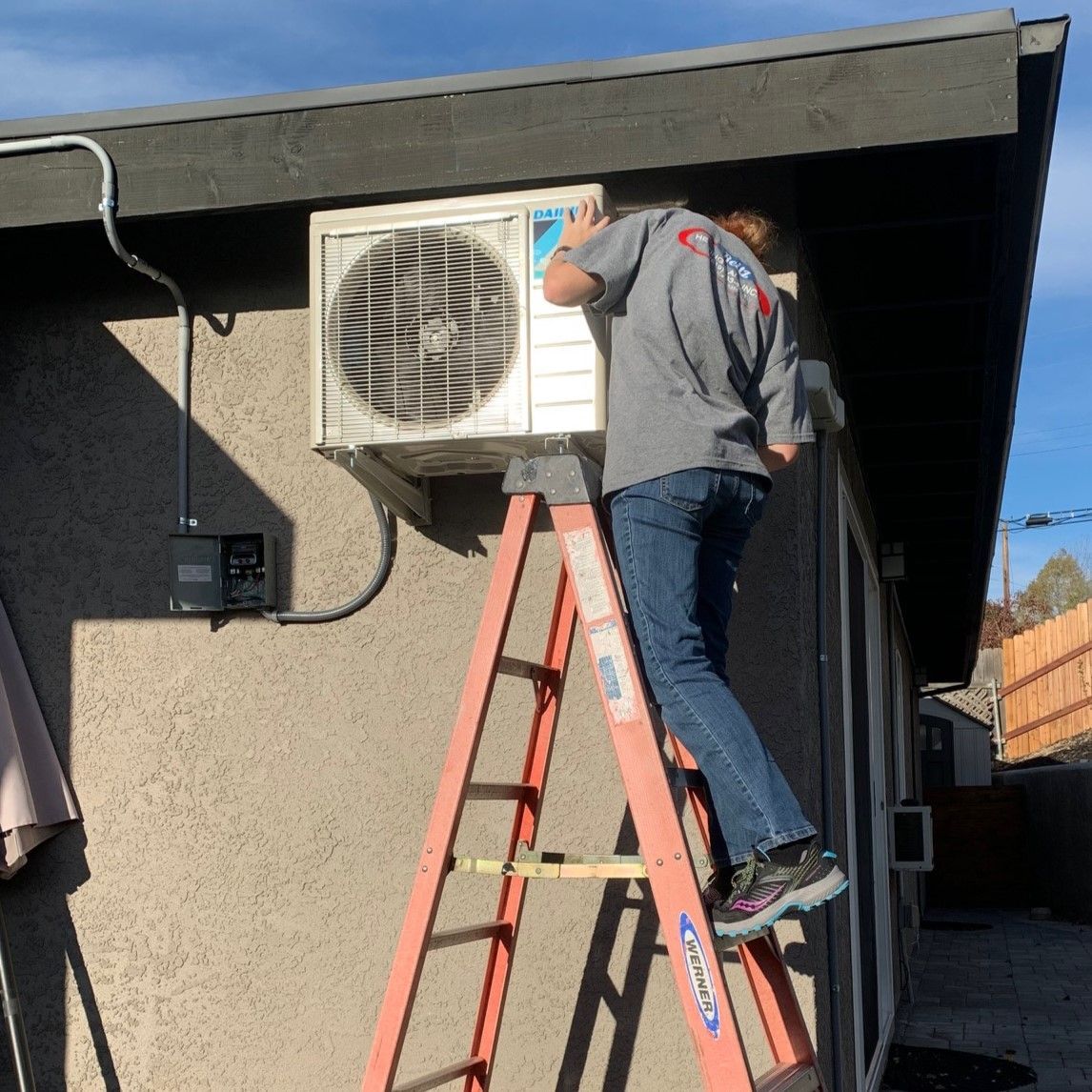
Professional installation involves verifying ductwork integrity, sealing supply and return plenums, checking refrigerant line sizing, confirming drain slope for condensate removal, and setting airflow to manufacturer specifications. Each step affects whether the system operates at its designed efficiency or struggles to perform because shortcuts were taken during installation to save time.
Once installation completes, you notice immediate temperature response when adjusting the thermostat, even airflow across all registers, and quieter operation as properly sized equipment no longer strains to meet demand. Energy consumption drops when modern systems operate at higher efficiency ratings than equipment manufactured fifteen or twenty years ago, and you gain the reliability of new components backed by manufacturer warranties rather than patching together failing parts on systems past their expected service life.
Installation includes startup procedures that verify refrigerant charge matches factory specifications, confirm electrical connections meet code requirements, and test safety controls under actual operating conditions. The process also involves adjusting airflow balance so distant rooms receive adequate supply without starving areas closer to the equipment, a detail that separates installations focused on long-term satisfaction from those prioritizing rapid completion.
Common Questions Before Installing New HVAC Systems
Homeowners in La Mesa and neighboring communities often ask these questions when considering HVAC replacement.
How is the correct system size determined for my home?
Maintenance involves inspecting and cleaning components that affect performance, checking refrigerant charge and airflow, testing safety controls, and identifying wear patterns that could lead to breakdowns if left unaddressed.
What happens to my existing ductwork during installation?
Existing ductwork is inspected for leaks, damage, and proper sizing, then sealed or modified as needed to support the new equipment's airflow requirements and prevent conditioned air from escaping into attics or crawlspaces.
Why does equipment efficiency matter beyond the purchase price?
Higher efficiency systems consume less energy to produce the same heating or cooling output, reducing monthly utility costs over the equipment's lifespan and often qualifying for rebates that offset the initial investment difference.
What makes installation quality different between contractors?
Quality installation includes proper refrigerant charging using subcooling and superheat measurements, duct sealing that prevents air loss, and airflow verification rather than simply connecting equipment and turning it on without testing performance.
How does working with a family-owned installer affect the process?
You receive personalized recommendations from owners who directly oversee every installation rather than sales representatives incentivized to push specific equipment brands, and the company's local reputation depends on your long-term satisfaction rather than short-term transaction volume.
Reitz Heating & Air Inc handles HVAC installations for La Mesa and San Diego area homeowners who want systems designed for their specific homes rather than standardized solutions. Schedule an installation estimate to review equipment options and discuss the details that affect comfort and efficiency.